
Teaching Toddlers to Clean Without Stress
Today I’m going back to my days as an early childhood educator to share a simple tip that actually works — if you do it.
Why You Can Trust This Method
I spent 14 years working in early childhood education — from the time I was pregnant with my oldest until I left my administrative support role in 2019.
Over the years, I worked in:
Private and public schools
Very small programs (30–40 kids)
Very large programs (700+ kids)
Christian and secular environments
General education and special education classrooms
I served as a teacher, aide, and administrative support. One of my favorite parts of the job was getting to know parents — especially moms — and hearing their excitement, worries, struggles, and the daily grind of raising kids. In reality, we are all so similar. We love our children and want to the do best we can for them. Maybe even better than what we had.
Across different schools, philosophies, leadership styles, and curriculums, one thing (of many I’m sure) always remained true:
Kids can be taught to clean up.
Why Cleaning Feels So Hard With Toddlers
Let’s be honest — teaching toddlers to clean can be the bane of our existence.
Toddlers would rather:
Dump toys and walk away
Toss things in the trash
Hide toys in corners or their pockets
Scatter a million tiny pieces across the room
It’s hard to keep things together, let alone feel like you still own a complete set of any toy. Sometimes we would just rather leave it a chaotic mess or do it ourselves, rather than fight through the struggle. But what does that teach our kids? I don’t know about you, but one of my many goals for my children was to teach them independence and responsibility, while empowering them to do the right thing, ultimately becoming second nature.
The Classroom System That Changed Everything
When I worked at a large public preschool (a Title 1 school), an outside agency introduced a new classroom management system. The method focused on site words as well as picture recognition, using a repeated method throughout the room. These were not my methods — but one piece was pure gold and completely duplicatable at home.
Their main strategy?
Introduce toys slowly and in small amounts, while teaching children how to clean up as they go. (you can hear more about this part of the method in Episode 86 of the Faith For Anxious Moms podcast.)
If I had known this when my own kids were little, I would have used it in a heartbeat. I’m a huge believer in the mantra, ‘If you get it out, you put it up when you’re done’. Everything has a home, everything has a place it ‘lives’.
A Simple, Practical System You Can Start Today
This system isn’t complicated, but it does take some upfront preparation. The payoff, though, is huge.
What You’ll Need:
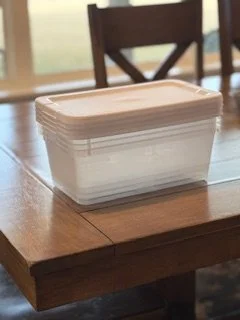
CLEAR BOXES
WITH LIDS!
Clear plastic shoebox-sized (or larger if you need them) with lids. Walmart or Amazon boxes works well. (I’ve tried Dollar Tree boxes, but in my experience, the lids don’t always stay on well)
Start with a few boxes & lids
A printer and paper (or labels)
Packing tape
Step 1: Sort the Toys
Take inventory of the toys you want to organize
Group like items together (Legos, toy cars, doll clothes, kitchen dishes, etc.)
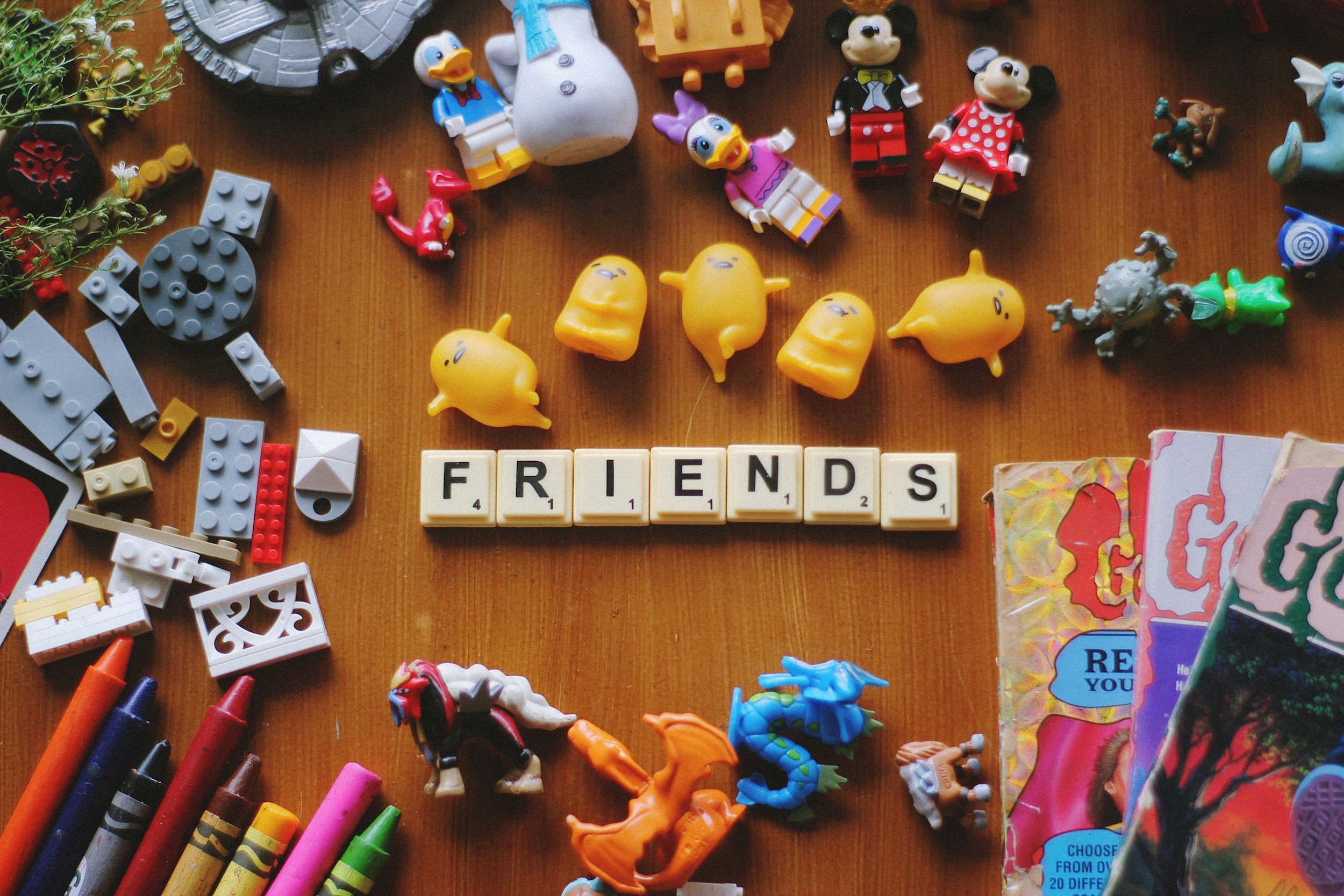
Have your kids help sort! “Oooh, do you see any dinosaurs? Can you help me put them over here?’
Step 2: Use Pictures, Not Words
You have to think like a non-reader. Preschoolers can’t read yet (usually not until ages 4–5), so word on labels won’t help. They’ll get there over time, but in the beginning, remember you’re teaching them to clean up. Independence is the goal for this skill. (you can always go back and print words on them later).
Instead:
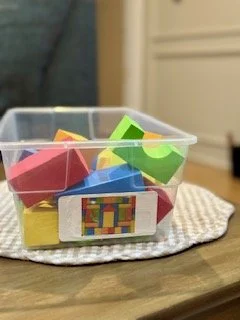
PICTURES MAKE SORTING SIMPLE
Instead:
Take clear photos of the toys
Or print pictures from the internet
Tape one picture to the front of each box
Why This Works (And Why Kids Love It)
Using a pictorial method allows kids automatically, visually understand what goes in the box, on their own. They can independetly look at the box, and see what goes in it, just by the picture. This item, belongs in this box.
Using picture-labeled boxes allows you to:
Give one task at a time ("Let’s pick up the Legos," then "Now put them in the box")
Teach sorting — a key Kindergarten skill we tested our Pre K students on each semester on in public preschool
Build early pattern recognition (another Kindergarten skill our Pre K students were tested each semester)
Reduce overwhelm for kids and yourself!
Other benefits include:
Fewer toys out at once
Less mess overall
Less resistance at cleanup time
Built-in vocabulary development as you model words to littles working on their vocabulary
Teamwork as you clean together
A sense of accomplishment for your child
Everyone feels calmer in a clean, step-directed environment — kids included.
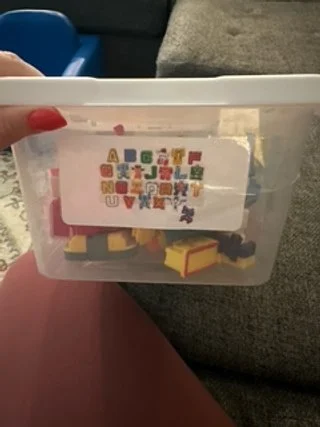
‘Alphabots’ I gave my grandson for Christmas, and the box I gave his mom:)
The Hidden Win: Toy Rotation
Too many toys out at once can be visually overwhelming — just like walking away from a messy kitchen after that meal that used every pot and pan known to man (spaghetti dinners do that to me). When the mess appears to be too big, it’s easier sometimes to just walk away.
But when toys are stored in boxes:
You can get out only what you think your child will clean up
You can rotate toys easily
Toys feel brand new when they come back out
Less clutter leads to more focused play and easier cleanup.
Start Small and Build From There
This method works best when you start somewhere, not everywhere all at once. Begin with a few boxes and add to it as you go. Over time, you can slowly step back as they gain confidence and independence.
They really do love helping.
They’re learning responsibility.
Their vocabulary grows.
And you’re creating habits that will serve them for life.
Would love to you see this in Action
If you try this and find it helpful, I would love to see it. Send me a picture on Instagram @drivethrumoms.
For more, listen to Episode 86 the Faith for Anxious Moms Podcast. Until next time — Happy Wednesday!